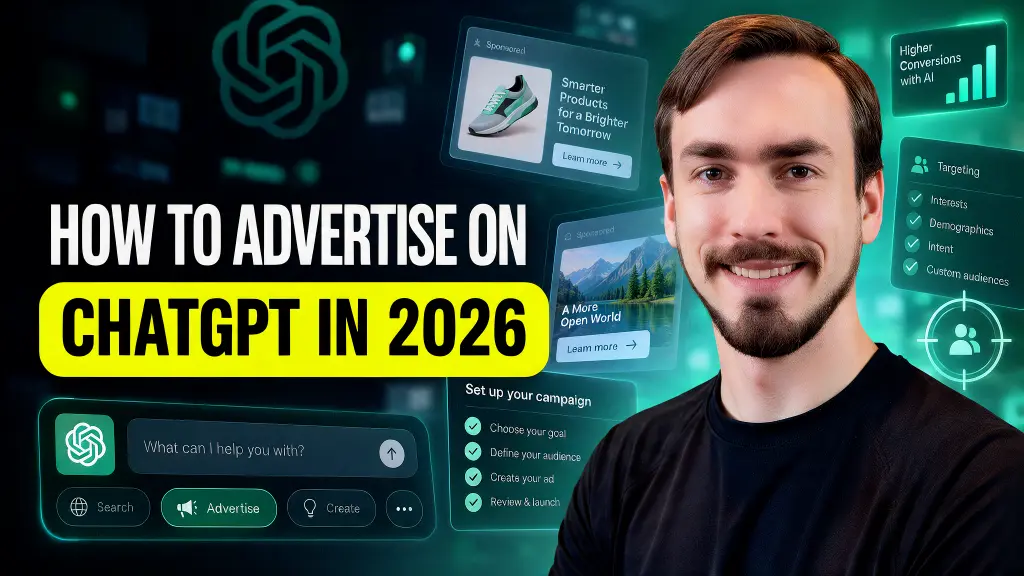

As artificial intelligence transforms how patients search for medical information, healthcare marketing is undergoing its biggest shift since the arrival of Google Search. Patients no longer rely solely on typing short terms like “dentist near me” into a search box. Instead, they engage in long-form, conversational dialogues with AI tools like OpenAI’s ChatGPT, asking detailed questions about symptoms, treatment options, costs, and provider reputations.

With OpenAI expanding advertising options (including an Ads Manager featuring cost-per-click bidding, impression-based metrics, and sponsored placements), healthcare providers face high-value opportunities alongside strict regulatory boundaries.
Here is how medical and dental practices can navigate ChatGPT Ads, HIPAA compliance, conversational targeting, and organic AI visibility in 2026.
The 2026 ChatGPT Ad Rollout for Healthcare
Who is currently prohibited from advertising
OpenAI’s ad platform includes self-serve tools and conversion measurement, but healthcare policies during the current rollout remain conservative.
Prohibited advertiser categories include:
- Prescription medicines, online pharmacies and telehealth services
- OTC medicines and pregnancy tests
- Medical procedures and experimental or investigational care
- Sexual health and adult-oriented services
- High-risk or unsafe products
- Health products “that exploit body-image concerns, distress, or other vulnerabilities”
- Wellness products with unsupported claims, such as diet pills, detox programs, and health coaching
- Cannabis, THC and psychedelics
OpenAI also explicitly prevents ads from appearing alongside sensitive health conversations, such as searches regarding specific pain, medical conditions, or post-procedure complications.
Who is eligible on case-by-case exceptions
Despite general restrictions on clinical care, narrow and elective healthcare segments receive approvals on a case-by-case basis:
- Consumer medical devices, wearables, and apps
- Dental services
- Dietary supplements
- Disease awareness campaigns that do not advocate for public policy
- Health insurance
- Hospitals and urgent care
- Medical testing and diagnostic products and services
- Minimally invasive cosmetic procedures
- Vision products and services
The opportunity to reach new customers
Advertising within ChatGPT offers direct exposure to high-value demographics. Millions of consumers utilize ChatGPT daily. These tech-savvy, research-oriented users actively utilize AI as a primary decision-making tool. Reaching this audience during active evaluation provides a unique positioning advantage over passive media channels.

Navigating HIPAA and Global Compliance
Healthcare advertising carries legal responsibilities that standard local business advertising does not. Deploying campaigns on AI platforms requires adherence to privacy and regulatory standards.
The BAA gap
OpenAI does not offer a Business Associate Agreement (BAA) for its advertising platform, although you may discover conflicting information because it offers a BAA for its API; these are two strictly separate things.
Transmitting or collecting Protected Health Information (PHI) through the ad ecosystem represents a critical legal risk. Practices must ensure no identifiable patient data, condition details, or form submissions containing PHI are processed by OpenAI’s advertising servers.
Regulatory watchdogs
- FTC Health Breach Notification Rule: The Federal Trade Commission mandates that health-related advertising claims must be truthful and backed by scientific evidence. Tracking technologies that share sensitive consumer health data with third-party ad networks without explicit consent face severe penalties.
- State-Level Privacy Laws: Regulations like Washington State’s My Health My Data Act restrict the collection and sharing of consumer health data, covering AI conversational inputs and health-seeking behaviors.
Is Your Business Ready for ChatGPT Ads?
The 7 key questions every business owner should answer before starting with ChatGPT Ads. (5 minutes to complete)
See if you're ready for ChatGPT Ads.
Language Targeting
Content Hints, Keywords, and Why the “Keywords are Dead” Narrative is Wrong
ChatGPT Ads and Google Ads differ by how they trigger ads. Google Ads relies on keyword targeting, while ChatGPT Ads relies on the context of the conversation. Because of this, most industry write-ups on how ChatGPT Ads work conclude that keywords are dead.
However, that misunderstands how ChatGPT Ads works under the hood, and it also doesn’t mean keywords aren’t used – they just aren’t used on the ad manager’s side.
How ChatGPT Ads selects its ads using internal searches and context hints
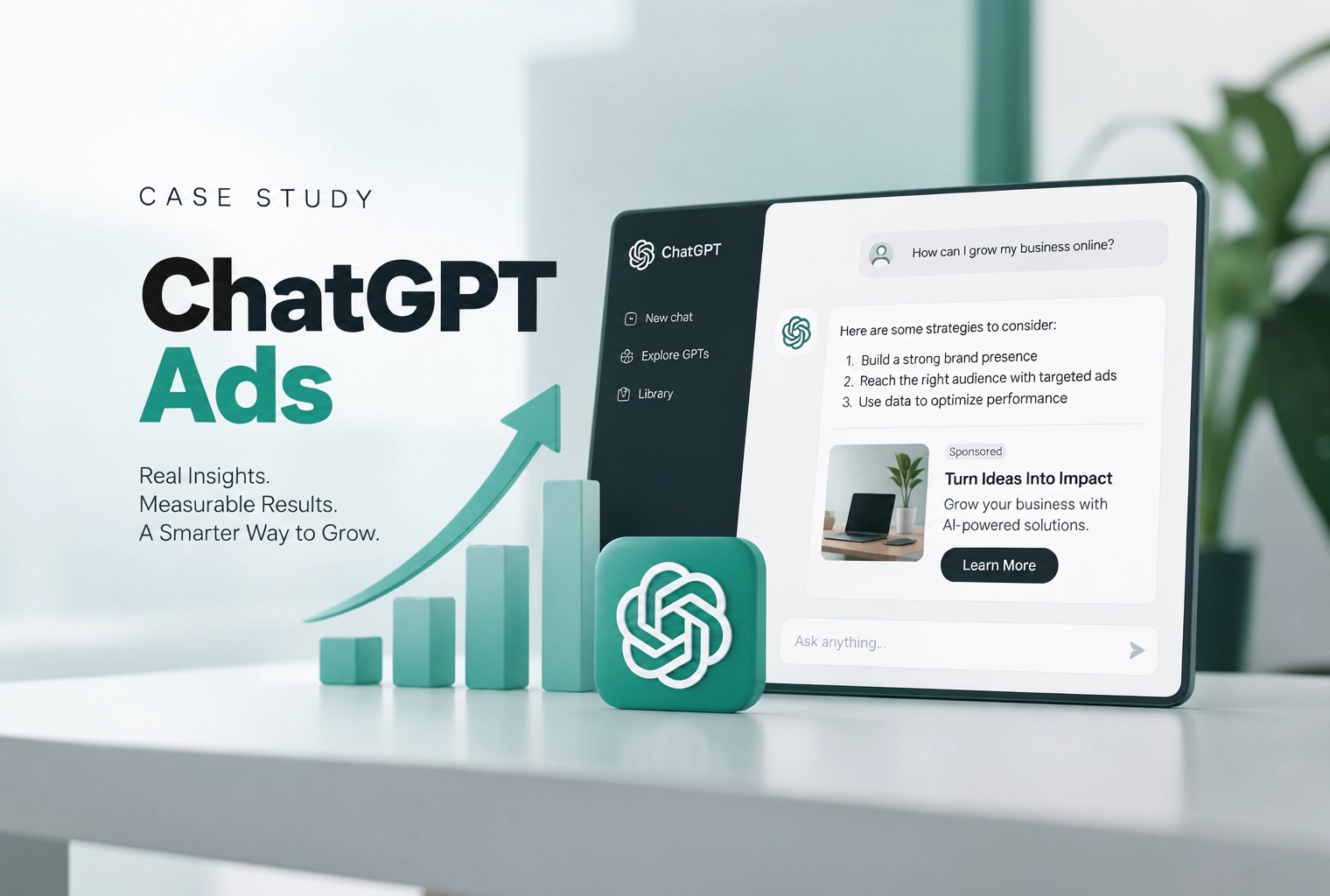
OpenAI published an engineering disclosure detailing the backend mechanics of how ads work. To simplify it, think of it as a “Google Ads in reverse” scenario. Instead of your keywords triggering on a search, keywords ChatGPT generates to represent the conversation trigger on your context hints in the ad database.
- ChatGPT uses a separate AI model to reduce the conversation into short, representative searches, similar to how it uses query fan outs to find information to compile an answer for AI search. As an example, let’s say a conversation about going hiking pointed to footwear recommendations, and it created the query “shoes appropriate for hiking trip”.
- ChatGPT turns those queries into vector embeddings, which are used to measure the mathematical relationships between text. In other words, how closely the words are related to another set of words or text.
- ChatGPT then matches those vector embeddings with eligible ads in a database based on their context hints, and selected eligible ads are then scored for quality, relevancy, and fitness to the conversation. Finally, an ad is selected.
While OpenAI has not formally confirmed every input pipeline, context hints likely feed both the ad-side embeddings and the downstream AI scoring models that determine final auction participation.
Other language considerations: service-based versus condition-based targeting
Because OpenAI restricts ads from triggering next to sensitive health topics, targeting strategies must adapt:
- Condition-based targeting (high risk): Targeting terms like “chronic back pain,” “toothache infection,” “anxiety,” or “substance abuse” risks immediate ad rejection or campaign suspension.
- Service-based targeting (compliant): Targeting terms like “orthopedic consultation,” “routine dental cleaning,” “clear aligner information,” or “cosmetic evaluation” aligns with ad safety guidelines.
Technical Implementation & Measurement
Server-side tracking
To prevent web browsers and third-party scripts from passing sensitive user data or health intent to OpenAI, implement server-side tracking architecture. Server-side environments strip Protected Health Information (PHI), IP addresses, and sensitive health parameters before routing interaction signals back to ad networks.
Privacy-safe UTMs
Tracking campaign performance requires clean, standardized URL parameters. Use privacy-safe UTM tags that track source, medium, and broad campaign categories without embedding sensitive patient identifiers or clinical conditions within the URL string.
Navigating clinical gaps to determine effectiveness
Standard consumer ad platforms cannot provide specialized healthcare metrics natively:
- They do not offer NPI-level (National Provider Identifier) physician targeting.
- They cannot track clinical outcomes such as verified prescription script lift, patient chart creation, or completed treatment starts.
Practices must pair ad platform metrics (impressions, clicks, spend, CTR) with HIPAA-compliant internal systems – such as call recording tools, unique tracking phone numbers, integrated CRM systems, and practice management software – to attribute booked consultations and production value accurately.
Specialty-Specific Strategic Analysis
Different medical and dental specialties face varying levels of policy restrictions, patient intent dynamics, and conversion opportunities on ChatGPT.
Elective procedures (high opportunity)
Cosmetic Dentistry, LASIK, Refractive Surgery, Fertility / IVF, and Medical Spas represent the ideal entry point. Patients undergo extensive research before committing to high-ticket, out-of-pocket procedures.
Paid ChatGPT ads and structured landing pages capture patients who are evaluating costs, comparing treatment alternatives, and looking for top-rated specialists.
Behavioral and sensitive care (high risk)
Conversational queries regarding Psychiatry, Addiction Recovery, Oncology, or Chronic Pain Management are strictly gated by ad safety policies. Paid ads in these contexts are ethically and legally restricted.
Urgent and primary care (volume play)
Urgent Care Centers, Walk-In Clinics, and General Practices are driven by immediate need and geographic proximity (e.g., “Where can I get a same-day X-ray near me?”). Capitalize on these queries using strict geographic radius targeting, clear messaging around wait times and insurance acceptance, and direct call-to-action buttons for walk-ins or online queue scheduling.
The Early-Mover Advantage
- Low competition economics: During the initial rollout phases of new advertising platforms, advertiser competition is sparse. Early adopters benefit from lower Cost-Per-Thousand (CPM) rates and lower Cost-Per-Click (CPC) bidding environments before major enterprise health systems enter and inflate auction costs.
- Data compound interest: Establishing campaigns and optimizing organic AI presence early creates a compounding data advantage. Practices gather real-world data on which conversational prompts convert into phone calls and scheduled appointments.
Ready to Scale Your Practice with ChatGPT Ads?
Navigating AI advertising policies, privacy restrictions, and conversational targeting requires specialized expertise. At StubGroup, we specialize in helping healthcare practices and businesses navigate ad compliance, build privacy-safe tracking, and run profitable campaigns across Google, Meta, and ChatGPT. Our team is ready to help you dominate your local market.
Schedule your free consultation with StubGroup today to get started!
Preguntas frecuentes
Can healthcare brands run ads inside ChatGPT in 2026?
Yes, but eligibility depends heavily on the specific healthcare category and target region.
In 2026, OpenAI allows approved advertisers in select, lower-risk healthcare segments (such as dental services, vision care, and general wellness) to run ads in the United States on a case-by-case basis. However, direct clinical care for acute conditions and regulated medical treatments remain strictly restricted or prohibited.
What specific healthcare categories are excluded from ChatGPT ads?
OpenAI strictly disallows or heavily restricts ads related to prescription drugs, uncertified telehealth services, addiction recovery centers, mental health crisis care, invasive surgical procedures, and unproven health claims or supplements.
Additionally, ads are blocked from appearing in conversations involving sensitive or vulnerable contexts, such as active disease diagnoses or personal mental health struggles.
Which healthcare specialties are best suited for early AI advertising?
Elective, consumer-driven specialties carry the highest opportunity and approval rate.
Cosmetic dentistry, orthodontics (Invisalign), optometry/vision care, and medical spas are ideal early adopters because patients spend significant time researching costs and options before booking.
Urgent care clinics also represent a strong volume play when using geographic radius targeting for immediate care needs.
Is advertising on ChatGPT legal for HIPAA-covered entities?
Advertising on ChatGPT is legal, provided that HIPAA-covered entities do not pass Protected Health Information (PHI) to OpenAI.
Because OpenAI does not sign Business Associate Agreements (BAAs) for its advertising platform, practices must ensure that no identifiable patient health data, condition parameters, or medical intake details are collected or transmitted through the ad platform.
Does OpenAI offer a BAA for healthcare advertisers?
No, OpenAI does not currently offer a Business Associate Agreement (BAA) for its self-serve advertising platform. Healthcare practices must treat the ad network as a non-HIPAA-compliant destination and structure their tracking and landing pages so that no PHI is ever processed by OpenAI.
How can I track conversions from ChatGPT ads without violating HIPAA?
Healthcare practices must implement server-side tracking architecture that strips away all Protected Health Information (PHI), IP addresses, and health intent parameters before sending basic interaction signals (such as a neutral lead event) back to OpenAI. Furthermore, tracking pixels must be kept off patient portals and medical intake forms, utilizing privacy-safe UTM parameters and internal CRM/call-tracking tools to measure actual booked appointments safely.
How do ChatGPT ads differ from Google Search ads?
Google Search ads rely on keyword queries entered into a search box, delivering text ads on search engine results pages. In contrast, ChatGPT ads rely on context hints and dialogue evaluation, matching ads to plain-language, multi-turn AI interactions. ChatGPT ads appear as natively styled, tinted callout boxes directly below AI-generated responses rather than traditional search engine listings.