As patient behavior shifts toward AI-assisted decision-making, dental marketing is undergoing its most significant transformation since the rise of search engine marketing. Dental practices face a crowded, expensive advertising landscape where traditional search ads carry an industry-average click-through rate of just 5.44%. Meanwhile, millions of health-conscious consumers turn to conversational AI platforms like ChatGPT to ask detailed, high-intent questions about procedures, pricing, recovery, and local dental specialists. Rather than simply typing “dentist near me” into a search box, patients are engaging in long-form dialogues to evaluate their care options.

To help dental practice owners and marketing managers capitalize on this shift, this playbook breaks down OpenAI’s ChatGPT Ads platform rollout, healthcare compliance rules, strategic integrations, technical setups, organic AI visibility, and practical implementation strategies.
The Launch and Evolution of ChatGPT Ads (2026)
Availability timeline
The advertising landscape within generative AI progressed rapidly in 2026. Following an initial pilot program launched in February 2026, OpenAI officially transitioned ChatGPT Ads into general availability with a self-serve Ads Manager in early May 2026.
This platform allows dental practices to pay for sponsored placements directly alongside or within conversational answers, reaching users precisely while they actively research local services and healthcare guidance.
Ad formats
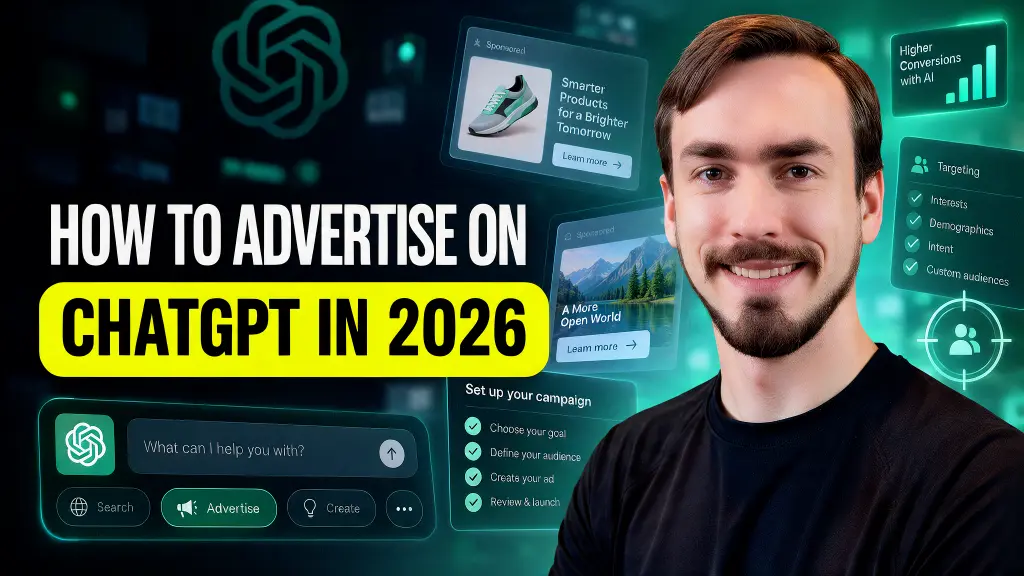
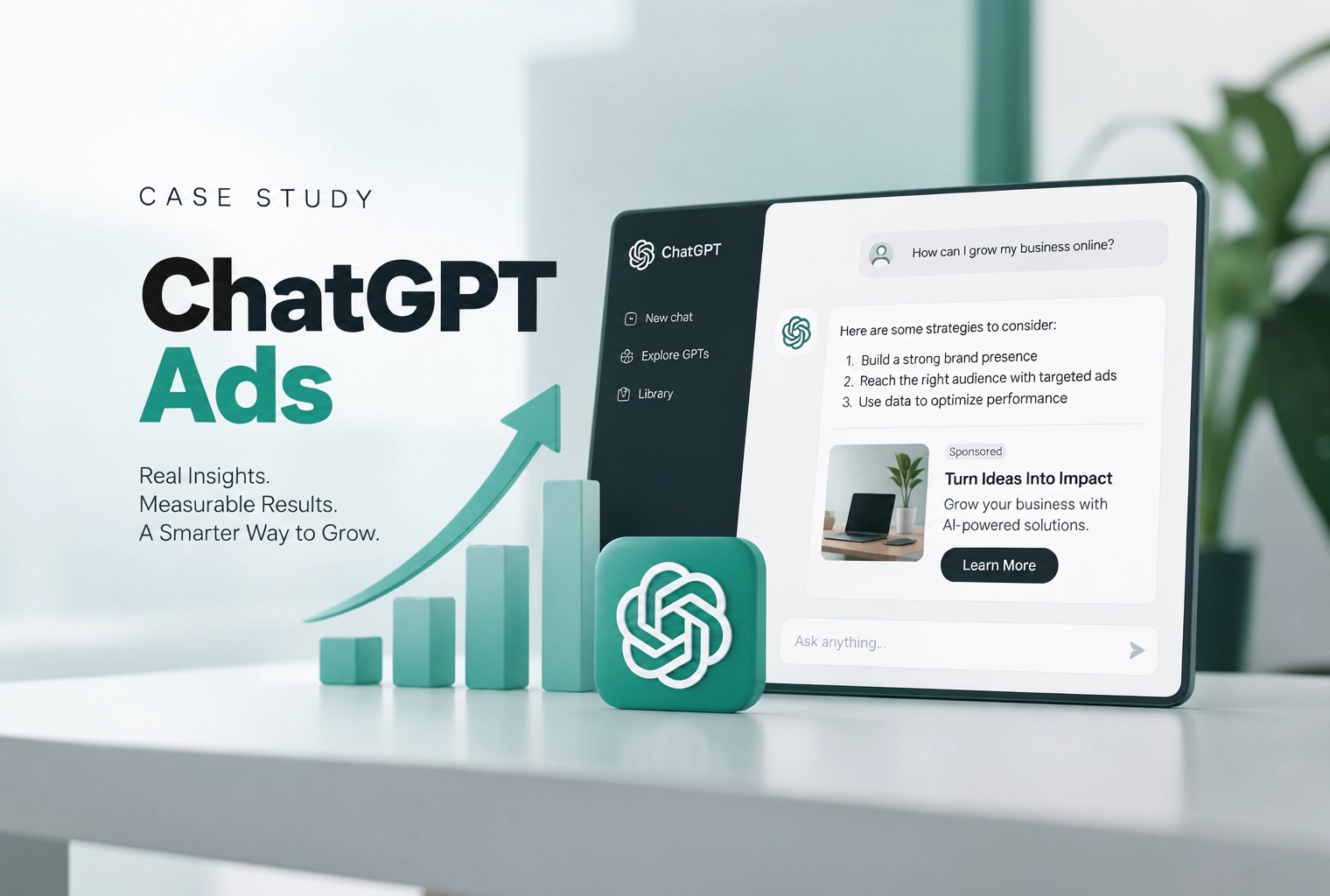
Unlike traditional digital platforms that rely on banner ads or intrusive pop-ups, ChatGPT Ads feature native formats often referred to as “sponsored cards” or “chat cards”. These placements appear as contextually relevant callout boxes directly below or alongside generated responses. The standard static ad format includes three core elements:
- Title: A clear, brand-focused or service-focused headline.
- Body Copy: A concise description capped at a 100-character limit.
- Image: A 1:1 square visual asset representing your practice or service.
This clean structure presents the ad as a helpful extension of the AI conversation rather than an interruption.

Platform reach
ChatGPT Ads target users across both the Free tier and subscribers on the $8/month “Go” tier, whether they are logged in or logged out.
To preserve premium user expectations, OpenAI maintains a strictly ad-free environment for Plus, Pro, Business, and Enterprise subscription tiers.
Is Your Business Ready for ChatGPT Ads?
The 7 key questions every business owner should answer before starting with ChatGPT Ads. (5 minutes to complete)
See if you're ready for ChatGPT Ads.
OpenAI’s Strict Healthcare Advertising Rules
Case-by-case approval
Because dental advertising involves clinical care, patient trust, treatment expectations, and strict regulatory oversight, running campaigns on ChatGPT is fundamentally different from advertising ordinary local services.
OpenAI enforces a manual, gradual approval process for healthcare providers in the United States. Dental practice owners must recognize that eligibility is not permission: every campaign undergoes manual policy review before going live.
Dental services eligibility
Gradual approval is currently granted to consumer-facing dental services, including general dentistry, cosmetic procedures, Invisalign, and teeth whitening.
Strict bans are enforced against experimental therapies, invasive high-risk surgical procedures, weight-loss promotions exploiting body image concerns, and direct, unverified treatment claims.
U.S. exclusivity
Currently, healthcare and dental advertising opportunities on ChatGPT are exclusively available to U.S.-based practices.
Strategic Integration: ChatGPT Ads vs. Google Ads
The intent funnel
ChatGPT Ads and Google Ads serve complementary roles across different stages of the patient acquisition funnel.
Patients utilize ChatGPT during the early research and comparison phase when asking multi-layered questions (for example: “What should I know before getting dental implants?” or “What are my options for replacing missing teeth?”).
In contrast, Google Ads excels at capturing immediate booking intent when a patient seeks fast, proximity-based execution (for example: “emergency dentist open Saturday”).
The “one booking signal” approach
To prevent inflated conversion numbers across multi-channel campaigns, practices should implement a unified tracking architecture.
By firing shared event IDs across both Google Ads and ChatGPT Ads Manager, your systems ensure that a single appointment booking is counted accurately once. This clear attribution enables practices to evaluate performance based on real cost per booked appointment and production value rather than vanity metrics like raw impressions or clicks.
Content hints, keywords, and language targeting
ChatGPT Ads and Google Ads differ by how they trigger ads. Google Ads relies on keyword targeting, while ChatGPT Ads relies on the context of the conversation. Because of this, most industry write-ups on how ChatGPT Ads work conclude that keywords are dead.
However, that misunderstands how ChatGPT Ads works under the hood, and it also doesn’t mean keywords aren’t used – they just aren’t used on the ad manager’s side.
How ChatGPT Ads selects its ads using internal searches and context hints
OpenAI published an engineering disclosure detailing the backend mechanics of how ads work. To simplify it, think of it as a “Google Ads in reverse” scenario. Instead of your keywords triggering on a search, keywords ChatGPT generates to represent the conversation trigger on your context hints in the ad database.
- ChatGPT uses a separate AI model to reduce the conversation into short, representative searches, similar to how it uses query fan outs to find information to compile an answer for AI search. As an example, let’s say a conversation about going hiking pointed to footwear recommendations, and it created the query “shoes appropriate for hiking trip”.
- ChatGPT turns those queries into vector embeddings, which are used to measure the mathematical relationships between text. In other words, how closely the words are related to another set of words or text.
- ChatGPT then matches those vector embeddings with eligible ads in a database based on their context hints, and selected eligible ads are then scored for quality, relevancy, and fitness to the conversation. Finally, an ad is selected.
While OpenAI has not formally confirmed every input pipeline, context hints likely feed both the ad-side embeddings and the downstream AI scoring models that determine final auction participation.
Technical Setup and Measurement
The conversion pipeline
Accurate measurement requires robust tracking. Practices should implement both the Measurement Pixel on their landing pages and OpenAI’s Conversions API (CAPI).
This dual-layer setup establishes a reliable conversion pipeline that captures form submissions, call clicks, and consultation requests even when client-side browsers block standard tracking scripts.
Attribution metrics
When a user clicks a sponsored chat card, the platform attaches a unique ad-click identifier known as the oppref parameter to the destination URL. Your intake system should capture this oppref ID and pass it back to OpenAI alongside hashed patient conversion data.
This privacy-safe matching loop feeds conversion signals directly back into the ad engine to optimize future delivery.
Bidding models
Within the Ads Manager, practices can structure their campaigns using flexible bidding frameworks based on campaign maturity:
- CPC (Cost-Per-Click): Ideal for controlling direct traffic costs during early testing.
- CPM (Cost-Per-Thousand Impressions): Useful for broad local brand awareness.
- Conversion-Optimized Bidding: Utilizes CAPI data to optimize delivery specifically toward users most likely to request a consultation or book an appointment.
Implementation Strategies for Practices
Ad copy nuance
Given strict healthcare regulations and consumer trust requirements, ad copy inside ChatGPT must maintain a helpful, conversational, and responsible tone.
- Non-Compliant Framing (Avoid): Promising guaranteed “perfect smiles,” mentioning prescription drug brand names, or guaranteeing precise surgical outcomes.
- Compliant Framing (Prefer): Focus ad copy on offering educational consultations, providing clear procedure overviews, explaining treatment steps, and giving transparent next steps to schedule a visit.
Landing page compliance
Clicking a sponsored card must lead the patient to a dedicated, high-converting, and fully compliant destination page. The landing page must mirror the precise treatment topic mentioned in the ad context, present factual clinical information, include clear provider credentials, display transparent financing overviews, and maintain a responsible tone that matches the ad to prevent campaign rejection.
Agency management versus software agents
Managing ChatGPT campaigns requires continuous monitoring and iteration. Practices typically choose between two management models:
- Manual Agency Management: Experienced digital marketing agencies handle campaign architecture, ad copy creation, conversion tracking, CAPI integration, and monthly ROI reporting.
- Automated Software Agents: Emerging AI tools automatically analyze search term reports, evaluate conversational intent trends, and update ad context hints on a weekly basis.
Ready to Scale Your Dental Practice with ChatGPT Ads?
Navigating AI advertising rules, privacy parameters, and conversational targeting requires specialized expertise. At StubGroup, we help dental and medical practices expand patient acquisition, establish privacy-compliant tracking, and run high-return campaigns across Google, Meta, and ChatGPT.
Schedule your free consultation with StubGroup today to get started!
Preguntas frecuentes
Can dentists actually advertise on ChatGPT?
Yes, but access is subject to a manual approval process. OpenAI opened its self-serve Ads Manager in May 2026 for U.S.-based practices, permitting consumer-facing dental categories like general dentistry, cosmetic procedures, clear aligners, and teeth whitening to run sponsored placements. Every campaign undergoes manual policy review before going live, so eligibility does not automatically equal permission.
Is advertising on ChatGPT legal for HIPAA-covered entities?
Advertising on ChatGPT is legal, provided that HIPAA-covered entities do not pass Protected Health Information (PHI) to OpenAI.
Because OpenAI does not sign Business Associate Agreements (BAAs) for its advertising platform, practices must ensure that no identifiable patient health data, condition parameters, or medical intake details are collected or transmitted through the ad platform.
How can I track conversions from ChatGPT ads without violating HIPAA?
Healthcare practices must implement server-side tracking architecture that strips away all Protected Health Information (PHI), IP addresses, and health intent parameters before sending basic interaction signals (such as a neutral lead event) back to OpenAI. Furthermore, tracking pixels must be kept off patient portals and medical intake forms, utilizing privacy-safe UTM parameters and internal CRM/call-tracking tools to measure actual booked appointments safely.
How do ChatGPT ads differ from Google Search ads?
Google Search ads rely on keyword queries entered into a search box, delivering text ads on search engine results pages. In contrast, ChatGPT ads rely on context hints and dialogue evaluation, matching ads to plain-language, multi-turn AI interactions. ChatGPT ads appear as natively styled, tinted callout boxes directly below AI-generated responses rather than traditional search engine listings.