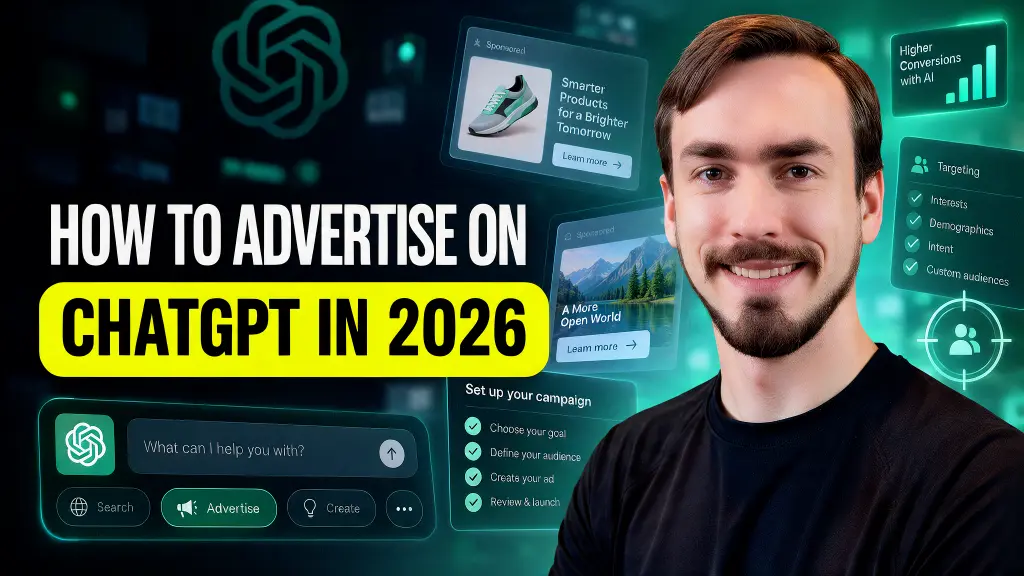

For years, apparel advertising followed a predictable visual playbook: capture attention with scroll-stopping Reels on Instagram and TikTok, retarget browsers with dynamic product carousels, and run Google Shopping ads. Today, consumer behavior has entered the era of conversational commerce. Shoppers are no longer just scrolling for inspiration. They are opening ChatGPT to ask detailed styling, fit, and occasion questions before ever visiting an online store.
With OpenAI’s rollout of ChatGPT Ads, clothing brands can now meet shoppers at the exact moment they articulate what they need. This guide breaks down how to structure your product feeds, write effective Context Hints, calculate returns-adjusted margins, and balance paid placements with organic AI visibility to profitably capture this high-intent audience.
The Shift to Conversational Fashion Discovery
Moving From Keywords to Conversations
Traditional search advertising relies on short, static keywords like “linen dress” or “women’s midi dress size 8.”
In ChatGPT, shoppers instead engage in multi-question conversations that reveal their exact constraints, body type, budget, and timeline, asking questions like, “What should I wear to a September wedding in Lisbon?” or “Which work pants don’t wrinkle when you travel?”
Conversations Center Around Intent-Based Moments
While fashion is often driven by aesthetic inspiration, high-intent purchasing decisions inside ChatGPT cluster around four primary conversational moments:
Occasion Dressing: Shoppers planning outfits for specific events and dress codes, such as summer outdoor weddings, galas, holiday parties, or job interviews.
Climate-Specific Needs: Queries tailored to weather and environment, such as breathable office wear for humid climates or warm, weather-resistant winter layers.
Problem-Solving and Fit: Functional requests including wrinkle-free travel clothes, capsule wardrobes, or garments cut for specific builds (tall, petite, plus size, or athletic).
Comparison and Discovery: Shoppers comparing fabric performance (such as merino wool vs. cotton) or searching for affordable alternatives to luxury labels.
The Chat Provides a Stylist Experience
Shopping for clothing online can easily lead to choice paralysis. ChatGPT reduces decision fatigue by acting as an AI personal stylist, evaluating weather, dress codes, fabric properties, and personal aesthetics to narrow overwhelming catalogs down to a few curated recommendations.
ChatGPT Ad Formats for Apparel
Sponsored Product Cards and Carousels
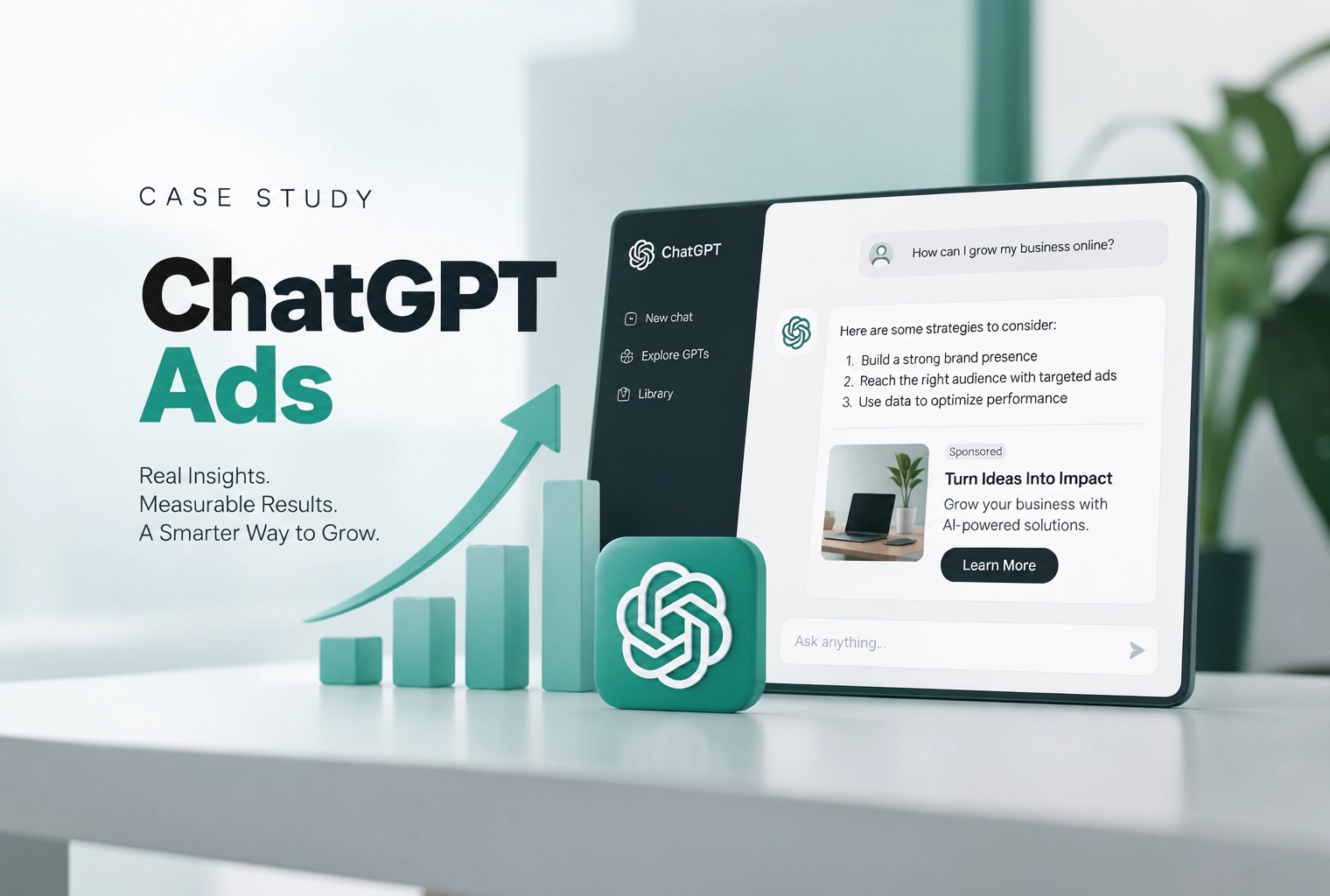
The primary native e-commerce ad unit in ChatGPT is the Sponsored Product Card (alongside OpenAI’s multi-product carousel format for browsing multiple items in a single unit). When a shopper’s conversation matches your campaign, the card displays a product image, product title, price, brand name, and a direct link to the Product Detail Page (PDP), plus trust badges such as star ratings where applicable.
Example ChatGPT Apparel Placement
- ChatGPT Organic Response: [Curated outfit and fabric advice for a warm-weather outdoor wedding]
- Sponsored Product Card: A Linen Suit for Summer Weddings — Breathable linen-blend suit in 6 colors. Free tailoring & 30-day returns. | $295 [Shop Now →]
Native Placement
Sponsored cards appear directly at the bottom of ChatGPT’s generated answer, clearly labeled as sponsored.
Because OpenAI enforces strict separation between paid ads and organic responses (meaning advertisers cannot buy influence over what ChatGPT says in its answer), the ad unit feels like a helpful, logical next step rather than a disruptive banner.
The 100-SKU Minimum
Building manual ads for hundreds of styles, sizes, and seasonal colorways is unsustainable for clothing brands. To solve this, OpenAI launched automated Product Feed Ads in June 2026 (and followed up with a dedicated ChatGPT Ads app for Shopify merchants).
By uploading a structured catalog, ChatGPT dynamically generates product cards from your inventory. The platform requires a 100-SKU minimum (supporting up to 1 million SKUs), a threshold most apparel brands clear easily with a single seasonal collection.
Product Feeds
Unlike traditional shopping engines that match exact search keywords, ChatGPT matches products semantically to a shopper’s conversational context.
While your ChatGPT product feed shares structural similarities with Google Merchant Center, simply duplicating and adjusting a raw Shopping feed leaves revenue on the table. To win placements in single product cards and multi-product carousels, your catalog needs clean technical formatting, rich descriptive context, and automated daily syncing.
Feed Format and Technical Requirements
You can upload and manage your product catalog inside ChatGPT Ads Manager under Tools → Feeds. OpenAI accepts UTF-8 encoded .csv, .tsv, or .txt files (supporting catalogs starting at 100 SKUs up to 1 million SKUs), with core fields that map smoothly from standard Google Shopping feeds when formatted to OpenAI’s specifications:
- Product Titles: Up to 150 characters. Replace SKU codes and keyword-stuffed strings (such as “Men’s Jacket Coat Waterproof Blue M”) with natural, descriptive titles (such as “Packable Waterproof Shell Jacket for Trail Running”).
- Product Descriptions: Plain text up to 5,000 characters. Replace dry technical spec sheets with benefit-driven, problem-solving copy.
- Availability Status: Must explicitly use one of four exact values (in_stock, out_of_stock, preorder, or backorder), paired with accurate pricing, sizing, and real-time stock data.
Enriched Descriptions
Enriching your metadata with descriptive attributes (covering fabric composition, cut, fit, ideal climate, seasonality, and styling context) allows ChatGPT to connect your products directly to specific shopper scenarios. For example, describing an item as a “Relaxed-fit white linen shirt ideal for tropical weather, summer travel, and smart-casual outfits” gives the matching engine clear conversational hooks.
When writing your 5,000-character product descriptions, follow three core principles:
- Lead with primary benefits and outcomes: Translate technical specs into real-world value (for instance, replacing “double-wall vacuum insulation” with “keeps coffee hot for 12 hours on long commutes”).
- Spell out use cases and compatibility: Explicitly include who the product is for, gift recipient scenarios, ideal weather or occasions, and device or wardrobe compatibility.
- Align feed copy with your landing page: Ensure your on-page schema markup, visible Product Detail Page (PDP) copy, and feed descriptions tell a consistent story so you avoid policy or eligibility flags.
Integrating Customer Review Sentiment
ChatGPT weighs customer feedback and product ratings heavily when evaluating relevance. Analyzing your verified customer reviews at scale lets you extract recurring buyer sentiment (such as “soft fabric,” “great breathability,” or “runs small in the shoulders”) and weave those real-world insights directly into your product descriptions and feed attributes. Addressing common fit and performance questions inside the feed helps the AI recommend your items with higher confidence.
Visual Standards for Product Cards
ChatGPT displays product feed ads as single Sponsored Product Cards and horizontal multi-product carousel cards across mobile and desktop interfaces. To pass review and stand out in the chat interface, product images must meet strict visual guidelines:
- Dimensions: Square aspect ratio with a minimum resolution of 256×256 pixels (512×512 pixels or higher recommended for crisp display).
- Framing and Background: Clean, neutral, or solid white background where the product occupies 70% to 80% of the frame (such as clean flat lays or focused model crops showing drape and fit).
- No Overlays: Zero promotional badges, watermarks, or text overlays on the image.
Automated Syncing, Shopify Integration, and the 14-Day Expiry Trap
A critical technical requirement in OpenAI’s feed specification is that product feed items expire after 14 days. If you manually upload a static CSV file, your products will go stale and stop serving impressions after two weeks.
To maintain continuous campaign delivery without manual re-uploads, connect an automated hosted URL feed or SFTP feed that refreshes daily. If your store runs on Shopify, you can streamline this entire process using the native ChatGPT Ads app in the Shopify App Store, which connects your store directly to Ads Manager to automatically sync product catalog changes, pricing, stock levels, and OpenAI Pixel tracking.
Is Your Business Ready for ChatGPT Ads?
The 7 key questions every business owner should answer before starting with ChatGPT Ads. (5 minutes to complete)
See if you're ready for ChatGPT Ads.
Language Targeting and Context Hints
What We Know About Context Hints So Far, and How They and Aren't Like Keywords
In place of keyword lists, advertisers use something called Context Hints, which are text descriptions. They are intended to reflect the buyer and the conversational moment, and so far much of the advice has focused on describing the person, the occasion, and the problem:
- "Man going to a summer outdoor wedding who wants something smart but cool in the heat."
- "Business traveler who needs work trousers that still look pressed after a day in a suitcase."
However, that's not exactly how they work.
How ChatGPT Ads selects its ads using internal searches and context hints
OpenAI published an engineering disclosure detailing the backend mechanics of how ads work. To simplify it, think of it as a "Google Ads in reverse" scenario. Instead of your keywords triggering on a search, keywords ChatGPT generates to represent the conversation trigger on your context hints in the ad database.
- ChatGPT uses a separate AI model to reduce the conversation into short, representative searches, similar to how it uses query fan outs to find information to compile an answer for AI search. As an example, let's say a conversation about going hiking pointed to footwear recommendations, and it created the query "shoes appropriate for hiking trip".
- ChatGPT turns those queries into vector embeddings, which are used to measure the mathematical relationships between text. In other words, how closely the words are related to another set of words or text.
- ChatGPT then matches those vector embeddings with eligible ads in a database based on their context hints, and selected eligible ads are then scored for quality, relevancy, and fitness to the conversation. Finally, an ad is selected.
While OpenAI has not formally confirmed every input pipeline, context hints likely feed both the ad-side embeddings and the downstream AI scoring models that determine final auction participation.
Negative phrases
In the fall of 2026, ChatGPT Ads rolled out negative phrases to a select few advertisers under the Brand Safety section. If you have access to this, you can explicitly mention where you do not want your ads to appear.
Attribution and Measurement
The Measurement Pixel and Conversions API (CAPI)
Relying solely on client-side browser pixels leaves significant conversion gaps caused by ad blockers, iOS privacy protections, and cross-device browsing (such as a shopper researching outfits on the ChatGPT mobile app during a commute and purchasing on a desktop browser later that evening).
Apparel brands should deploy a dual-layer measurement framework combining the client-side OpenAI Measurement Pixel (tracking items_added, checkout_started, and order_created) with the server-side Conversions API (CAPI).
Passing a shared event_id across both sources ensures OpenAI deduplicates purchases accurately, while enabling Automatic Advanced Matching (AAM) sends hashed customer identifiers (such as email address, phone number, and postal code) to improve match rates.
For clothing brands, CAPI also lets you pass post-return order adjustments or net kept revenue back to OpenAI so automated bidding optimizes toward profitable buyers rather than serial returners. You can monitor your setup health in Ads Manager under Tools → Conversions using OpenAI's Event Quality Score (rated 1 to 10).
Attribution Windows for Outfit Research
Because conversational apparel searches often happen during early occasion planning or wardrobe research (such as shopping weeks ahead of a wedding, vacation, or seasonal shift), buying cycles frequently stretch across multiple weeks. Setting a 30-day click attribution window (alongside a 0- or 1-day view window) in your Ads Manager reporting preferences is recommended to capture the full revenue impact of early styling conversations.
Solving the Direct Traffic Problem with UTMs
Without explicit URL parameter tagging, over 80% of clicks from conversational AI apps lose referrer data, causing Google Analytics 4 (GA4) and Shopify analytics to misclassify paid ChatGPT clicks as "Direct" traffic.
Enable dynamic URL parameters inside Ads Manager and append a standardized tracking template to all product feed URLs (?utm_source=chatgpt&utm_medium=cpc&utm_campaign=&utm_content=&oppref=) so you can isolate paid ChatGPT revenue from organic AI referrals.
The “Returns Math” and Profitability
Net ROAS vs. Gross ROAS
With recommended starting CPCs landing around $3.00 to $5.00 (we’ve found the average CPC to be $2.12), apparel brands must calculate profitability on kept revenue rather than gross orders. High return rates in fashion (commonly 20% to 40%) directly inflate your effective acquisition cost.
Consider how the unit economics play out when comparing a single-item order against a multi-item bundle at a $4.00 CPC and a 20% return rate (factoring in $12 per return for return shipping and restocking):
Single $95 Pair of Trousers (3% Conversion Rate):
- Gross Margifn (60%): $57.00
- Net Profit After 20% Returns: $43.20
- Customer Acquisition Cost ($4 CPC at 3% CVR): $133.33
- First-Order Result: -$90.13 Net Loss
2-Pair Trouser Bundle at $170 AOV (5% Conversion Rate):
- Gross Margin (60%): $102.00
- Net Profit After 20% Returns: $79.20
- Customer Acquisition Cost ($4 CPC at 5% CVR): $80.00
- First-Order Result: Roughly Break-Even on Order One
Bundling Strategies
As the margin math above demonstrates, selling a single $95 item at a $4 CPC often results in a steep first-order loss once return shipping and lost margin are factored in. Increasing Average Order Value (AOV) through multi-item bundles (such as “2 pairs for $170”), capsule outfit sets, or higher-ticket outerwear is often essential to make unit economics profitable at premium CPCs.
Landing Page Optimization
The primary driver of apparel returns is fit uncertainty, and shoppers arriving from ChatGPT have often just asked a specific fit question. To boost conversion rates and protect your net margins, link ads directly to the specific PDP (never a generic category page) and answer the fit question immediately:
- Display a size guide one tap away with measurements in both inches and centimeters.
- List the model’s height and exact size worn on the product page.
- State free return and exchange policies clearly near the add-to-cart button.
- Surface verified fit notes from customer reviews directly above the fold.
ChatGPT Ads vs. Meta and TikTok Ads
Visual Disruption vs. Contextual Solutions
Social platforms and conversational AI play fundamentally different roles in how shoppers discover and buy clothing:
Meta and TikTok Ads (Visual Discovery): Built on visual interruption and behavioral tracking, using 9:16 vertical Reels, user-generated content (UGC), lookbooks, and lookalike audiences to spark impulse discovery at lower CPMs ($5 to $18). They excel at top-of-funnel awareness and retargeting, though creative assets fatigue quickly and require constant refresh cycles.
ChatGPT Ads (Contextual Solutions): Built on real-time conversational intent, using clean product feeds, enriched metadata, and benefit-focused copy to capture shoppers actively solving a wardrobe problem. While CPCs are higher ($2.50 to $8.00), there is zero algorithmic creative fatigue, and clicks come from high-intent buyers narrowing down their final purchase decision.
The Hybrid Playbook
Rather than treating social and AI platforms as competing budgets, profitable fashion brands run a hybrid acquisition model:
- Top of Funnel (Meta and TikTok): Build brand identity, showcase garment movement and aesthetics through video, and spark emotional demand.
- Bottom of Funnel (ChatGPT): Capture the resulting research and comparison traffic when shoppers turn to AI to verify fabric quality, compare sizing, and make their final buying decision.
Ready to Launch ChatGPT Ads for Your Apparel Brand?
ChatGPT Ads are still in their early stages, meaning competition across most apparel and fashion categories is a fraction of what you face on Google Shopping, Meta, or TikTok. Getting your product feed, Context Hints, and attribution dialed in now lets you capture lower CPCs and build an early-mover advantage before competitors crowd the auction.
At StubGroup, we have helped over 3,000 clients, including scaling apparel and e-commerce brands, generate more than half a billion dollars in revenue through profitable paid acquisition. From optimizing your product catalog metadata and writing high-intent Context Hints to setting up OpenAI Pixel/CAPI tracking and managing bids around true net ROAS, our team handles the entire process.
For a limited time, we are waiving our $1,500 setup fee and taking $500 off monthly management for new ChatGPT Ads clients Contact StubGroup today to schedule your free ChatGPT Ads consultation and build a custom roadmap for turning ChatGPT conversations into profitable orders.
FAQs
How many products do apparel brands need to run Product Feed Ads on ChatGPT?
OpenAI requires a minimum of 100 SKUs (and supports up to 1 million SKUs) to run automated Product Feed Ads in ChatGPT. Because size and color variants count toward your catalog, most clothing brands easily meet this requirement with a single seasonal collection, and Shopify merchants can sync their catalogs directly using the ChatGPT Ads app for Shopify.
Can clothing brands bid on keywords in ChatGPT Ads?
No. ChatGPT Ads do not use traditional keyword bidding. Instead, advertisers write 1- to 2-sentence natural-language Context Hints at the ad group level describing the shopper’s occasion, climate needs, or fit problem. OpenAI’s matching engine uses those hints alongside your enriched product feed metadata to serve your Sponsored Product Card during relevant conversations.
How do apparel brands reach ChatGPT Plus and Pro subscribers if those tiers are ad-free?
ChatGPT Ads only appear to logged-in adult users on the Free and $8/month Go tiers. To reach subscribers on ad-free Plus, Pro, Business, and Enterprise plans, apparel brands should invest in Generative Engine Optimization (GEO) by earning third-party PR features, creator reviews, authoritative styling guides, and detailed PDP metadata so ChatGPT recommends your products organically.
How should fashion brands calculate ROAS on ChatGPT Ads?
Because apparel return rates typically range from 20% to 40% and ChatGPT Ads CPCs often fall between $3.00 and $5.00 (up to $8.00 in competitive categories), brands should measure Net ROAS based on kept revenue after return shipping and restocking costs. Increasing Average Order Value (AOV) through multi-item bundles and reducing fit-related returns with clear PDP size guides and model measurements is essential for first-order profitability.