The digital landscape for home services is undergoing its most significant shift since the arrival of Google Search. For decades, roofing contractors have fought in overcrowded, increasingly expensive arenas: competing for space in Google Search Ads, fighting over the Google Maps 3-Pack, or getting squeezed by Local Services Ads (LSA). At the same time, many roofers remain trapped by lead aggregators like Angi and Thumbtack, paying top dollar for shared, low-intent leads that get sold to three or four competitors simultaneously.
This year a new marketing frontier opened. Homeowners are no longer just searching for a phone number on Google; they are having long, detailed conversations with conversational AI models like OpenAI’s ChatGPT.
Instead of typing “roofer near me,” homeowners are describing complex problems: “I have water staining on my second-floor ceiling after last night’s hail storm, what should I do?” or “How much should I expect to pay for a 2,800-square-foot architectural shingle replacement in Dallas?”

By advertising inside these exact conversational moments, roofing companies can reach homeowners while they are actively framing their buying decisions, establishing brand authority long before competitors even realize the lead exists.
How ChatGPT Ads Works
Understanding how ChatGPT Ads work is essential because they are different from Google and Microsoft Ads.
Opening ChatGPT to US businesses
Early testing of ChatGPT advertising was gated behind invite-only pilots requiring minimum spends of $50,000 to $200,000. However, in May 2026, OpenAI launched its self-serve ChatGPT Ads Manager to the general public in the US.
This update removed large spend minimums, allowing small-to-medium local home service contractors to launch campaigns directly with flexible daily budgets starting at $25/day.
Where ads appear and what they do and don’t do
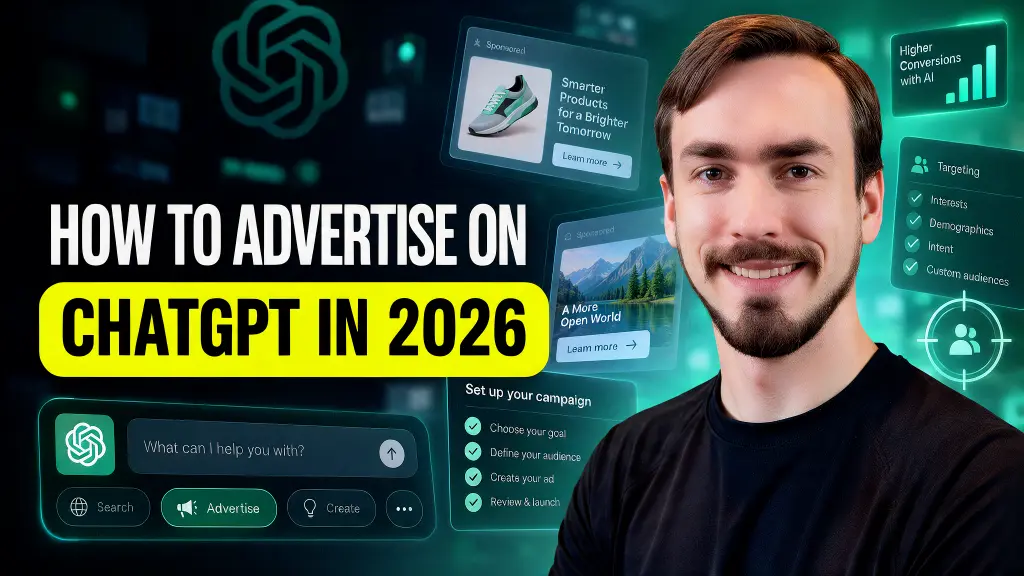
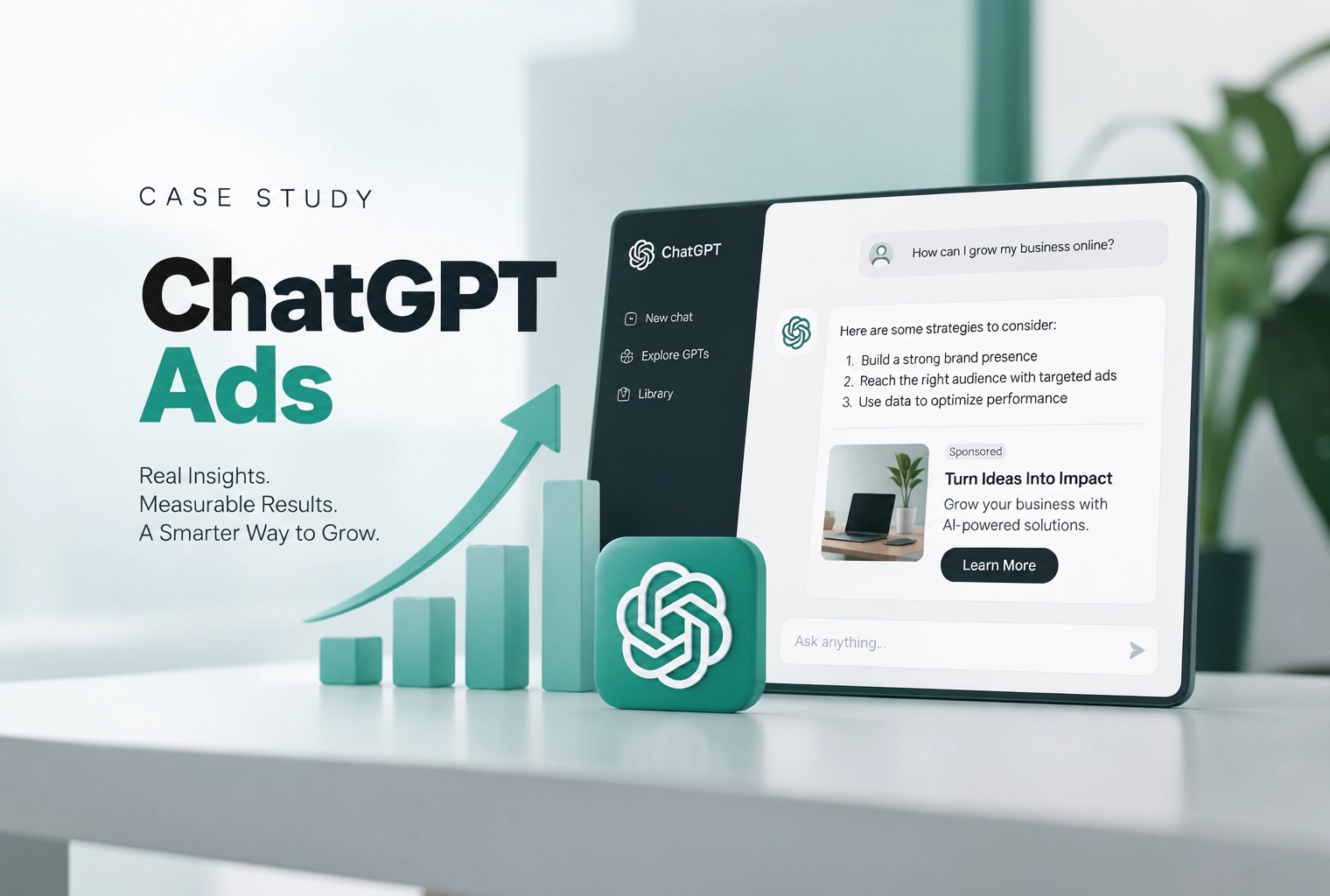
ChatGPT Ads do not appear as intrusive pop-ups or sidebar banners. Instead, they appear as visually distinct, tinted sponsored cards located directly beneath the AI-generated answer.

OpenAI also enforces a policy of “Answer Independence” with its ads. An advertiser cannot pay to be recommended inside the AI’s organic text response.
The organic answer is generated independently based on web authority signals (like Google Business Profiles, directories, and reviews).
The sponsored card appears separately below the text as a contextually relevant next step, carrying a clear “Ad” or “Sponsored” label.
Language targeting
The biggest difference between how Google Ads work and how ChatGPT Ads work is with what triggers your ads.
Google Ads relies on keyword targeting (“roofer near me”), and when someone searches with a phrase involving that, your ads can appear.
On ChatGPT, ads are context-driven. The platform takes into consideration the broader conversation you have in the chat interface and bases the ads that appear on the context.
That doesn’t mean that “keywords” aren’t entirely used, however.
What we know about how content hints work, and how they are and aren’t like keyword targeting
In October 2026, OpenAI published a post outlining how its ads work. To keep it simple, think of it as a “Google Ads in reverse” scenario. Instead of your keywords triggering on a search, keywords ChatGPT generates to represent the conversation trigger on your context hints in the ad database.
- ChatGPT uses a separate AI model to reduce the conversation into short, representative searches, similar to how it uses query fan outs to find information to compile an answer for AI search. As an example, let’s say a conversation about going hiking pointed to footwear recommendations, and it created the query “shoes appropriate for hiking trip”.
- ChatGPT turns those queries into vector embeddings, which are used to measure the mathematical relationships between text. In other words, how closely the words are related to another set of words or text.
- ChatGPT then matches those vector embeddings with eligible ads in a database based on their context hints, and selected eligible ads are then scored for quality, relevancy, and fitness to the conversation. Finally, an ad is selected.
While OpenAI has not formally confirmed every input pipeline, context hints likely feed both the ad-side embeddings and the downstream AI scoring models that determine final auction participation.
Is Your Business Ready for ChatGPT Ads?
The 7 key questions every business owner should answer before starting with ChatGPT Ads. (5 minutes to complete)
See if you're ready for ChatGPT Ads.
Advantages for Home Services to Advertise on ChatGPT Now
The early mover window
Digital marketing history repeats itself. The contractors who adopted Google Ads in the early 2000s or Google Local Services Ads in the late 2010s acquired customers at pennies on the dollar before the auctions became saturated.
Today, while thousands of roofers fight for Google Maps rankings and pay high prices on search auctions, virtually no local competitors are active on ChatGPT Ads. Being an early mover means capturing high homeowner attention at a fraction of the cost, establishing local category dominance before market saturation drives up prices.
Escaping the shared lead trap on other platforms
Traditional lead marketplaces like Angi, Thumbtack, or HomeAdvisor sell the same homeowner inquiry to multiple contractors simultaneously. This creates a frantic race where roofers must call within seconds, resulting in a race to the bottom on price.
ChatGPT Ads Manager operates on a direct model:
- ChatGPT Ads: Provides exclusive lead ownership, sends traffic to your custom landing page, builds high brand authority, and engages homeowners during the research phase.
- Aggregators (Angi/Thumbtack): Sells the lead to 3 to 5 roofers, forces a frantic speed-to-call race, creates a price-shopping focus, and captures late-stage shoppers only.
Taking advantage of the research phase
Most search advertising targets homeowners at the very end of the funnel when they are looking for a phone number to call. However, full roof replacements (which routinely run between $10,000 and $25,000+) involve an extended research phase.
Homeowners ask ChatGPT multi-part questions to educate themselves before contacting a contractor (for instance: “Is a $15,000 estimate reasonable for a 2,400 sq ft roof?” or “Should I repair a 20-year-old roof or fully replace it?”). Advertising during this research window allows contractors to influence the homeowner’s buying criteria, build trust, and offer an instant estimate or free inspection before the customer ever contacts another roofer.

Campaign Logistics and Targeting
Geotargeting
Because roofing is an exclusively local, drive-time service, precise geographic controls are essential.
The ChatGPT Ads Manager supports targeting by State, Designated Market Area (DMA) / Metro Area, and Postal Codes (ZIP Codes).
Additionally, advertisers can utilize Postal Code Exclusions. If a contractor serves a major metropolitan area but wants to exclude far-out rural counties or areas outside their crew drive times, negative location lists prevent wasted ad spend.
Bidding models and how they compare with Google Ads
ChatGPT Ads operate under two primary pricing models: Cost-Per-Click (CPC) averaging $3.00 to $5.00 per click in home service categories, and Cost-Per-Thousand Impressions (CPM) ranging from $25.00 to $35.00 per 1,000 impressions.
While clicks and impressions are monitored, contractors must evaluate campaigns based on trade-specific business outcomes:
- Cost Per Lead (CPL): Total Ad Spend divided by Total Form Submissions plus Tracked Phone Calls.
- Cost Per Signed Contract: Total Ad Spend divided by Total Closed or Booked Roof Jobs.
In non-branded Google Search, roofing cost-per-lead (CPL) averages $124 to $228+ per lead. A ChatGPT campaign achieving a $3.50 CPC with a 5% landing page conversion rate yields a $70 CPL, making the channel highly competitive when tied to real signed contracts.
Crafting high-converting ad creating
Ad copy inside a conversational interface must maintain a helpful, informative tone. Google-style “shouting” (e.g., “#1 ROOFER NEAR YOU! CALL NOW 24/7!”) reads like spam inside a chat window and lowers click-through rates.
- Avoid (Search Style): “#1 Cheap Roofer Near You! Fast Service, Call Now!”
- Prefer (Conversational Style): “Get an Instant Roof Quote or 24-Hour Storm Damage Inspection in [City Area]”
Effective roofing ad copy should emphasize fast response times (“Same-day inspection available in [Metro Area]”), specific material systems (“Specializing in GAF Architectural Shingles and Standing Seam Metal”), local credibility, and interactive offers.
The Insurance and Storm Dimension
Storm-response readiness
Roofing is heavily driven by weather events. When hail storms or severe winds hit a neighborhood, affected homeowners flood AI tools with questions within the first 72 hours.
By pre-building storm-response campaigns in Ads Manager (complete with ZIP-code targeting for vulnerable neighborhoods), roofers can activate campaigns instantly when severe weather occurs, capitalizing on the critical window when homeowners are evaluating damage.
Insurance communication and compliance
Navigating insurance claims requires clear communication. Stressed homeowners need education on how adjusters evaluate damage. However, strict legal boundaries apply: roofers must avoid unlawful claims practices, making illegal insurance promises, or acting as public adjusters.
- Compliant Messaging: "We walk the roof alongside your adjuster to ensure all visible storm damage is documented. Once your claim is evaluated, we review the approved scope together."
- Prohibited Messaging (To Exclude): Never allow AI to draft copy that promises "we pay your deductible," "we guarantee insurance approval," or "we handle your insurance claim for you."
Tracking and Attribution Challenges
Dealing with the measurement gap
One of the primary challenges with early-stage AI advertising is attribution. When a user clicks a ChatGPT ad, referral data can sometimes be stripped, causing traffic to land in Google Analytics as unassigned "Direct" traffic.
To make your measurement reliable:
- Install the OpenAI Measurement Pixel and Conversions API (CAPI). Combining client-side pixel events with server-side CAPI ensures deduplicated, accurate conversion firing.
- Use dynamic UTM parameters. Append tracking parameters to destination URLs: ?utm_source=chatgpt&utm_medium=cpc&utm_campaign=.
- Deploy ChatGPT-dedicated call tracking. ChatGPT ad cards do not feature direct "click-to-call" phone buttons, so your clicks will land on a landing page. Using dedicated call-tracking phone numbers on those pages ensures phone leads are accurately mapped back to your ChatGPT campaigns.
Establish a framework for when to turn off ads
Before spending advertising dollars on an emerging platform, contractors should establish clear performance safeguards. Set a 30-to-60-day test window with a predefined spending cap and evaluate against strict Kill Criteria:
- Landing Page Conversion Rate: Green Light is > 4.0% Conversion; Kill Criteria is < 1.5% Conversion.
- Cost Per Lead: Green Light is < $90 CPL; Kill Criteria is > $180 CPL.
- Signed Contracts: Green Light is Positive ROAS in the first 60 days; Kill Criteria is Zero jobs after 50 qualified leads.
Are You Ready to Scale Your Roofing Business with ChatGPT Ads?
Navigating AI advertising setups, context hints, and conversion tracking requires specialized expertise. At StubGroup, we help local home service contractors scale revenue, eliminate wasted ad spend, and dominate new channels across Google, Meta, and ChatGPT.
Whether you need to build storm-response campaigns, integrate server-side CAPI tracking, or optimize your practice for organic Generative Engine Optimization (GEO), our team is ready to deliver measurable results.
Schedule your free consultation with StubGroup today to get started!
Frequently Asked Questions (FAQs)
Do homeowners actually use ChatGPT to find roofing contractors?
Yes. Millions of homeowners use ChatGPT daily to ask detailed, long-form questions about roof repairs, hail damage inspections, material choices, and estimated replacement costs before reaching out to local providers.
Is ChatGPT advertising available for small local businesses or only large brands?
ChatGPT Ads are fully available for small businesses. OpenAI transitioned from high-spend pilot programs to an open, self-serve Ads Manager in May 2026 with daily minimum budgets starting at $25/day.
How much do ChatGPT ads cost per click for a roofer?
In home service and local contracting categories, average CPC rates on ChatGPT Ads range between $3.00 and $5.00 per click.
Across all accounts we manage, we have an average CPC of $2.12 and a CPM of $29.61.
What is a recommended starting budget for a ChatGPT ad pilot?
A recommended pilot starts at the platform’s $25/day minimum daily spend over a 30-to-60-day learning window (roughly $750 to $1,500/month in total ad spend).
How do I track if a signed roofing contract actually came from an AI conversation?
By combining server-side CAPI tracking with the OpenAI Measurement Pixel, dynamic UTM parameters (utm_source=chatgpt), and dedicated call-tracking phone numbers on your destination landing pages.
Can I target specific zip codes or neighborhoods with my ads?
Yes. ChatGPT Ads Manager supports geographic targeting down to the State, Designated Market Area (DMA), and specific Postal ZIP Code levels, including negative location exclusions.
How do I bid on “hail damage” or “roof leak” if there are no keywords?
Instead of bidding on keywords, you configure Context Hints: natural language descriptions entered in Ads Manager that describe homeowner problem scenarios (e.g., “a homeowner asking about water staining on a ceiling after a hail storm”).