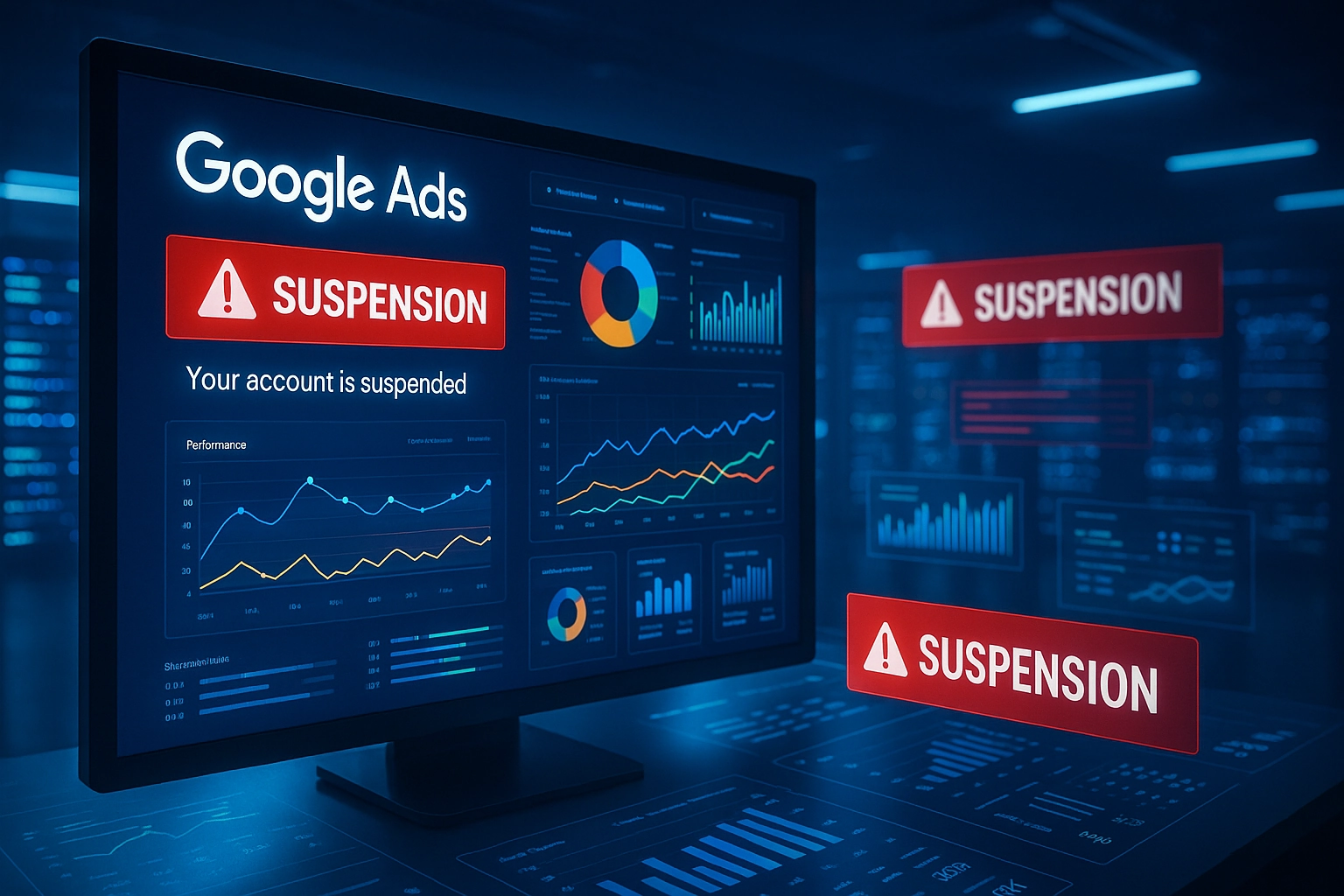
Google has updated what you can do after your Google Ads account is suspended. These changes, which address account suspensions, took effect on June 19, 2024.
This move by Google aligns with how Microsoft handles suspended accounts. Microsoft has always had stricter limits on what you can do with a suspended account, and now Google is following suit.
If you’re an advertiser, you need to understand these new restrictions and how they affect you. Let’s get into what these changes are and what they mean for you.
How Google Ads Suspension Worked Before
In the past, you could still modify campaigns, create ads, and change account info even if your Google Ads account was suspended. This allowed advertisers to address issues and prepare for an appeal with minimal hassle.
Google’s New Restrictions

June 2024 and beyond, here’s what’s changing:
- Billing: You can pay, download tax documents, and add or update payment methods to avoid suspension.
- Suspicious payment activity: Accounts will be suspended if Google detects suspicious payment activity (fraudulent or unauthorized transactions).
- Account settings: You can cancel your account and request a refund for any prepaid but unspent funds.
- Appeals and advertiser verification: You can appeal the suspension and complete advertiser verification.
- Security: You can update security settings (2-step auth).
- View account: You can navigate your account, view all pages, and download reports.
But the biggest change is you can no longer create or modify campaigns, ads or make any major changes in your Google Ads accounts.
What This Means for Advertisers
These new restrictions make fixing an account suspension more complicated. Before you could tweak your account settings or campaign settings to fix issues. Now you need to do more.
Some things you will need to do include:
- Website changes: Make sure your website is compliant with Google’s policies.
- Comprehensive appeal documentation: Provide a detailed explanation and evidence in your appeal to Google.
- Business factors: Structure your business info and maintain a good online reputation.
Additionally, accounts related to the suspended account, such as those using the same email or payment method, or linked to the same manager account, may also be affected and require attention.
Unknowns and Challenges
There are still some unknowns with the new policy. For example, will this apply to accounts that were suspended before June 19th? For now, it looks like the answer is no, but that could change.
Additionally, accounts linked to a suspended account, such as those under the same manager account, may also face suspension.
Are there some nuances in how this is being implemented? It’s a developing situation and advertisers need to stay tuned for more info.
Advertisers Steps to Address Suspensions & Stay Compliant

Now more than ever you need to be proactive to avoid suspensions. Here’s what you can do to safe-guard your advertising status as much as possible:
- Website compliance: Make sure your website is compliant with all of Google’s policies. You can download a copy of our Guide to Google Policies here.
- Business info and reputation: Ensure your business info is accurate and your online reputation is good.
- Good appeals: Be careful with your appeals and provide all the info Google needs to see.
- Unauthorized account activity: Monitor for any unauthorized account activity. If you detect suspicious activity Google may
- Manager account: Manage your linked accounts carefully. Accounts linked to the same manager account may also be suspended if the original account is suspended. These linked accounts will be lifted when the suspension is resolved.
Stub Group’s Help for Advertisers
Suspensions are complicated, but that’s where Stub Group comes in.
We help businesses fix suspended Google Ads accounts and policy violations. Our team is ready to help you with website changes to detailed appeals.
Contact us at Stub Group if you have a suspended account. We’ll get you back up and running and dominating Google Ads again.
Get our Free Guide to Fixing Google Suspensions
Discover the StubGroup Google Policy Center. Your hub for fixing suspensions, staying compliant, and keeping ads running smoothly.
Sign Me Up!
Get our Free Guide to Fixing Google Suspensions
Discover the StubGroup Google Policy Center. Your hub for fixing suspensions, staying compliant, and keeping ads running smoothly.
Sign Me Up!
Get our Free Guide to Fixing Google Suspensions
Discover the StubGroup Google Policy Center. Your hub for fixing suspensions, staying compliant, and keeping ads running smoothly.
Sign Me Up!
Get our Free Guide to Fixing Google Suspensions
Discover the StubGroup Google Policy Center. Your hub for fixing suspensions, staying compliant, and keeping ads running smoothly.
Sign Me Up!